Agricola All Creatures...
Twin Sails InteractiveBoard
3.865.00 Reviews
- Version
- 207
- Installs
- 10.00K
- Age Rating
- Everyone
Screenshots
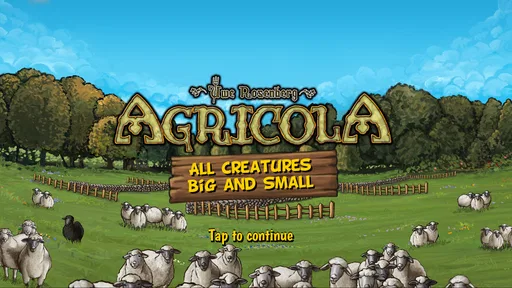
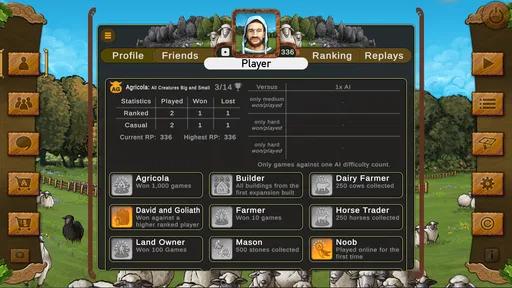
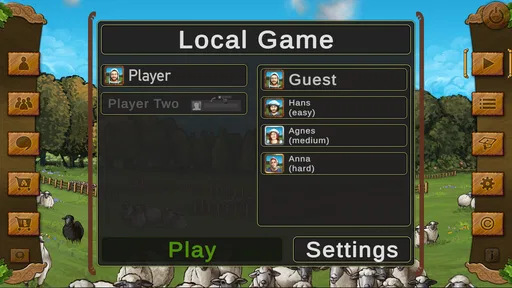
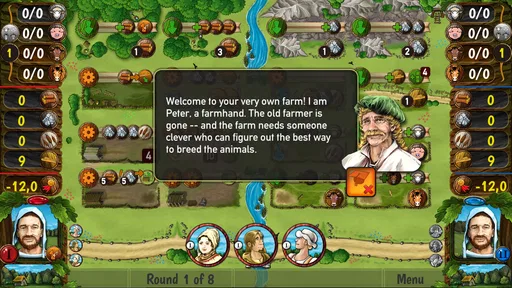
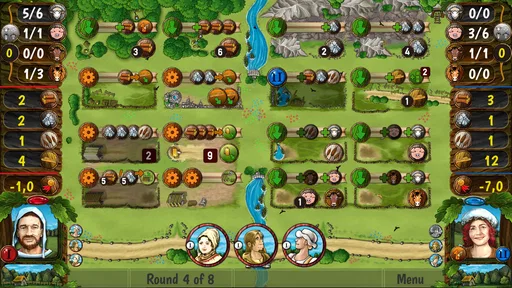
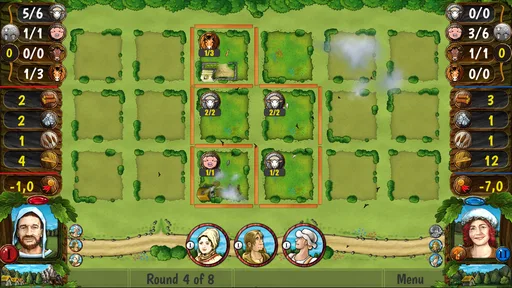
Our Review of Agricola All Creatures...
 Analysis by Appyee
If you enjoy board games where a small decision can quietly shape the whole match, Agricola All Creatures is a thoughtful digital adaptation worth considering. It is a paid board game for Android, developed by Twin Sails Interactive, built around livestock breeding in a focused two-player format. I found it much more interesting than its simple farm theme first suggests: the challenge is not merely collecting animals, but deciding which improvements, spaces, and breeding choices will still help several turns later.
This is not a quick, casual farming game in the usual mobile sense. There are no crops to decorate, no endless stream of simple upgrades, and no relaxed tapping loop that plays itself. Instead, every turn asks you to weigh a useful action now against a stronger position later. That makes it especially appealing if you already like strategic board games and want something that can be played alone or with another person in a compact digital format.
The game has an average rating of 3.8 from around 600 ratings, with about 65 written reviews and over 10 thousand installs. Those figures suggest a modest but real audience rather than a huge mainstream hit. I would describe it as a niche purchase for players who enjoy planning, not as a universal recommendation for anyone looking for a free mobile game.
What the farm-focused board game expects from you
The central idea is easy to understand: you and another player develop small farms while trying to breed and manage livestock more effectively than your opponent. The theme is friendly and approachable, but the decisions are more demanding than the presentation may imply. Space is limited, useful actions are contested, and a choice that looks efficient in the opening can become awkward when your farm starts filling up.
That tension is the best part of the design. You are constantly balancing immediate needs with future flexibility. Taking an animal may feel valuable, but it also creates a housing problem. Building an improvement may solve that problem, but using the action for construction can mean giving up an opportunity to expand your herd. I like this because the game makes ordinary-looking farm decisions carry genuine strategic weight.
The two-player focus also changes the mood compared with larger board games. You are not managing a crowded table full of competing personalities. You are watching one opponent closely, noticing which spaces they prefer and judging whether to take an action mainly because it helps you or because it denies them something important. Against the computer, that same structure becomes a useful way to learn the system without needing another person available.
At first, I recommend resisting the temptation to plan the entire match. New players often try to calculate an ideal farm from the opening turn, but the available actions and the opponent’s choices make that approach brittle. A better starting habit is to identify one immediate problem, such as housing or food, and solve it without damaging your next two turns. That simple discipline makes the game feel far less mysterious.
Why the two-player format matters
Many digital board games try to reproduce a large tabletop experience and can feel crowded on a phone. This one benefits from its narrower scope. With only two sides involved, each action is easier to follow, and the consequences of a blocked option are clearer. I found it easier to learn the rhythm because the board does not become visually or strategically overwhelming.
The trade-off is that there is less room for a relaxed, social group experience. If your favorite board games depend on negotiation, alliances, or a large table of friends, this is probably not the right fit. Its appeal comes from direct competition and careful timing. You are not chatting your way through a party game; you are trying to make your farm work under pressure.
What the purchase includes in practical terms
The listed price is $4.49, with in-app purchases shown at $2.99 per item. That places it closer to a premium board-game purchase than to a free-to-play farming app. I personally prefer that expectation because the main question becomes whether the game itself is worth your time, rather than whether progress is being shaped around constant spending.
It is rated for Everyone, and the minimum operating-system requirement is Android 5.1. The current version is 207, so it is not tied to an especially recent Android release. Before buying, I would still check that your device has a comfortable screen for reading the board and controls. A strategy game can technically run on an older phone while remaining less pleasant if the interface feels cramped.
The game was released on August 9, 2016, and that age is noticeable in the overall presentation. I would not choose it for cutting-edge visuals or the newest mobile interface conventions. Its value is in the underlying board-game structure, not in modern spectacle. Players who judge a game mainly by animation polish may find it dated, while board-game fans are more likely to forgive the presentation.
Getting through the first setup without feeling lost
When I begin a strategy game like this, I do not try to understand every possible improvement immediately. I first look for the basic loop: where actions are selected, how animals are acquired, how the farm’s spaces are used, and where the turn ends. That approach is particularly helpful here because the farm can look simple while hiding several competing priorities.
Start by reading the available actions before committing to one. Do not assume that the most visibly rewarding option is the best opening move. A good first turn usually creates a foundation for later choices rather than producing the largest immediate gain. If you can improve your ability to house or support livestock, that may be more valuable than taking a single attractive animal too early.
The interface deserves patient attention during the first few turns. On a small screen, it is easy to tap through a choice before noticing what it changes. I recommend pausing after each action and checking the farm again instead of rushing through the turn. This is not a game where speed improves your result, and a few seconds of inspection can prevent an avoidable mistake.
Playing the opening match against the computer is the least stressful way to learn. It gives you room to test an action, see how the board responds, and understand the consequences of filling space. Even if you normally prefer human opponents, the computer match works well as a tutorial because the game’s main difficulty comes from planning rather than from learning a long list of button combinations.
A sensible first-match mindset
For the first match, choose a modest objective: make your farm stable before trying to make it impressive. That means paying attention to where animals will live and how your next acquisition will fit. A farm that has room to adapt is often stronger than one that looks productive but has no flexibility left.
I also suggest treating the first game as an information-gathering session. Notice which actions your opponent repeatedly takes, which spaces become contested, and how quickly your early decisions create pressure. You do not need to win immediately to learn something useful. The important discovery is understanding why a seemingly harmless choice can restrict your options later.
One practical tip is to avoid spending every useful resource as soon as you receive it. Keeping a little flexibility can matter more than completing an improvement at the earliest possible moment. This is one of the less obvious lessons of the game: efficiency is not always about maximizing the current turn. Sometimes it means preserving the ability to respond when the opponent changes the shape of the board.
Finding the first meaningful success
Your first satisfying breakthrough usually comes when you stop viewing animals as isolated rewards and start viewing them as part of a system. Acquiring livestock is only useful if your farm can support it and if the timing contributes to future breeding. That makes a successful action less about collecting something immediately and more about connecting several turns into one plan.
For example, imagine that you have an opportunity to take an animal, but your available space is already tight. The tempting move is to grab it before the opponent does. A more careful approach is to ask whether the animal will create a productive next step or simply occupy room that you need for a better action. If the choice causes a chain of awkward compromises, waiting can be the stronger play.
This is where the game separates itself from ordinary mobile farming titles. In a typical casual alternative, producing more is usually the safe answer. Here, expansion without structure can hurt. You need to think about capacity, timing, and denial. The result feels closer to a compact tabletop duel than to a virtual farm that rewards constant accumulation.
Another useful early habit is to watch the opponent’s needs, not only their score or visible progress. If they are clearly preparing for a particular action, taking that option first may be worthwhile even when it is not your ideal move. This does not mean blocking everything. It means recognizing that in a two-player game, denying a key opportunity can be almost as valuable as improving your own position.
How to judge whether a turn worked
After each turn, ask yourself three simple questions: did I solve an immediate problem, did I preserve a useful future option, and did I give my opponent an easy advantage? You do not need a perfect answer to all three. The questions simply prevent the common beginner mistake of judging a move only by what it produced right away.
A strong turn may look quiet. It might create room, prepare an improvement, or force the opponent to spend an action repairing a problem. Those results are easy to underestimate because they do not always produce an obvious reward. In my experience, learning to value preparation is the moment the game becomes much more satisfying.
Do not restart every time the opening goes poorly. A damaged position teaches you more if you continue long enough to see how the problem develops. Restarting can be useful when you are testing a specific line, but during the first match it is better to observe the consequences of your choices. That makes later victories feel earned rather than accidental.
Common confusion and the friction points to expect
The biggest source of confusion is the difference between a good-looking action and a good sequence of actions. New players may focus on the animal or improvement they want without considering the space and timing required to use it properly. The game rewards planning in connected steps, so an action should be judged by what it enables, not just by what it gives.
Another point of friction is the limited nature of a two-player board. An option can disappear because the opponent used it, and that can feel unfair if you were still thinking. It is not a flaw in the concept; it is the main competitive pressure. I found the experience more enjoyable once I started treating contested spaces as part of the puzzle rather than as interruptions to my plan.
The farm layout can also make mistakes feel more serious than expected. A poor placement may not end the match, but it can reduce flexibility and force you into less efficient actions. That is why I recommend slowing down before committing to anything that changes your available space. The game is forgiving enough to learn, but not so loose that placement becomes irrelevant.
Players coming from casual farming games should also adjust their expectations about pacing. Progress is not designed to feel constantly rewarding. Some turns are about preventing a future problem, and the payoff may arrive several actions later. If you need frequent visual rewards and fast unlocks, this may feel too deliberate. If you enjoy delayed payoff, the slower rhythm becomes one of its strengths.
Where it may not be the best choice
I would skip this purchase if you want a free, relaxing game that can be played with one hand while barely paying attention. The livestock theme may suggest simplicity, but the actual experience asks you to remember constraints and anticipate the opponent. It is also not ideal if you mainly want online social play, a large campaign, or a constantly changing collection of content.
I would also be cautious if your phone has a very small display or if you dislike older-looking digital board-game interfaces. The rules can be engaging while the presentation still feels less smooth than newer mobile releases. A newer board-game adaptation may be a better choice if interface clarity and visual polish are your highest priorities.
On the other hand, this is a strong option for someone who wants a focused strategy game that can be learned gradually. It suits a lunch break when you have time to think, a quiet evening against the computer, or a short competitive session with a friend who already understands board-game basics. The limited player count is not a weakness for the right audience; it is what keeps the contest readable.
Taking the next step beyond the beginner match
Once the basic loop feels comfortable, stop choosing actions only to fix the current turn. Start building a plan around the kind of farm you want to create, while remaining willing to change it when the opponent takes an important space. The best improvement in my own play came from planning two or three actions ahead without treating that plan as permanent.
A useful exercise is to replay an opening and choose a different priority. In one attempt, focus on securing room and stability early. In another, pay closer attention to denying the opponent a valuable option. Comparing the results teaches you more than simply repeating the same approach, because it reveals which decisions are genuinely powerful and which only looked attractive in the moment.
You should also learn to recognize when an action is defensive rather than productive. Protecting your future options can be the correct move even when it does not immediately improve the farm. This is a subtle trade-off that generic descriptions rarely explain, but it is central to enjoying the game: the strongest move may be the one that prevents your next several turns from becoming forced.
For a first-time user, my recommended path is simple. Begin with a computer match, inspect every action before selecting it, aim to establish stable space for livestock, and judge turns by their future consequences. After that, play again with more attention to the opponent’s priorities. By the third serious attempt, the board should feel less like a collection of rules and more like a conversation between two competing plans.
My final view is that Agricola All Creatures is a worthwhile specialist board game rather than a broad mobile recommendation. Twin Sails Interactive has brought a compact livestock-breeding contest to Android that rewards patience, careful timing, and the ability to give up a tempting short-term gain for a better position. It is not the freshest-looking or most immediately welcoming game in the category, and the two-player focus will limit its appeal for some people.
Still, if you want a premium strategy experience where every patch of space matters and a small decision can reshape the rest of the match, I think it deserves a look. The Everyone age rating makes the theme approachable, but the planning gives it depth for adults and experienced board-game players. I would recommend it to a friend who enjoys thoughtful digital adaptations and does not mind learning through a few imperfect opening matches.
Verdict
Strengths of Agricola All Creatures...
- Faithfully recreates the strategic feel of the Agricola board game.
- Solo mode offers challenging opponents and replayable scenarios.
- Shorter matches make it easier to play than the full Agricola experience.
- Clear worker-placement rules are accessible after a brief learning period.
- Animal-focused gameplay gives the game a distinctive and satisfying theme.
Limitations of Agricola All Creatures...
- The interface can feel cramped on smaller smartphone screens.
- Artificial intelligence may feel predictable after extended play.
- Limited content can reduce replay value for experienced board gamers.
- The learning curve may still be steep for players new to worker placement.
- Some features and menus feel dated compared with newer mobile board games.
Other Releases by Twin Sails Interactive
View All


Similar Picks in This Category
View All
Ludo King®
Gametion4.1

Ludo
Yarsa Games4.6

Tile Master® - Matching Game
Higgs Studio3.6

Checkers Online
CC Games4.6

Dominoes
Loop Games4.7

Chess
Chess Prince4.6
Frequently Asked Questions
What is Agricola: All Creatures Big and Small?
Agricola: All Creatures Big and Small is a digital adaptation of the popular two-player farming board game. You develop a small farm, build different types of animal housing, collect resources, and raise livestock such as cows, horses, pigs, and sheep. The objective is to expand your farm efficiently and finish with more points than your opponent. Its rules are approachable, but the limited spaces and resources make every decision important.
How does the gameplay work in Agricola: All Creatures Big and Small?
The game uses a turn-based worker-placement system. You and your opponent take turns placing workers on available action spaces to gather materials, obtain animals, construct fences, or improve the farm. Once an action is occupied, it may no longer be available during that round, so timing matters. Animals also require suitable spaces, making planning and farm organization essential throughout each match.
Can I play Agricola: All Creatures Big and Small offline?
Yes, the app is designed to support offline play, which makes it suitable for playing against the computer without an internet connection. This is useful when traveling or when you want a quiet strategy session. However, features involving online opponents, account services, or certain platform functions may require connectivity. It is worth checking the current store description because available modes can vary between Android and iOS versions.
Does Agricola: All Creatures Big and Small include multiplayer?
Agricola: All Creatures Big and Small focuses on two-player competition and can generally be enjoyed against an artificial intelligence opponent or another person, depending on the version and platform features. Multiplayer options may include local play or online functionality, but availability can change with updates. Before downloading, users who specifically want online matches should verify the latest listing and supported multiplayer modes for their device.
Is Agricola: All Creatures Big and Small suitable for beginners?
The game is suitable for beginners who enjoy thoughtful strategy games, although it may take a few rounds to understand how actions, buildings, animals, and scoring work together. The compact two-player format makes it less overwhelming than many larger farming board games. New players should begin with an easier computer opponent or tutorial-style practice, then gradually experiment with different strategies as they learn the value of timing and space management.
Play our best games!


